Lake Keepit Celestial Astronomy Calendar for 2026
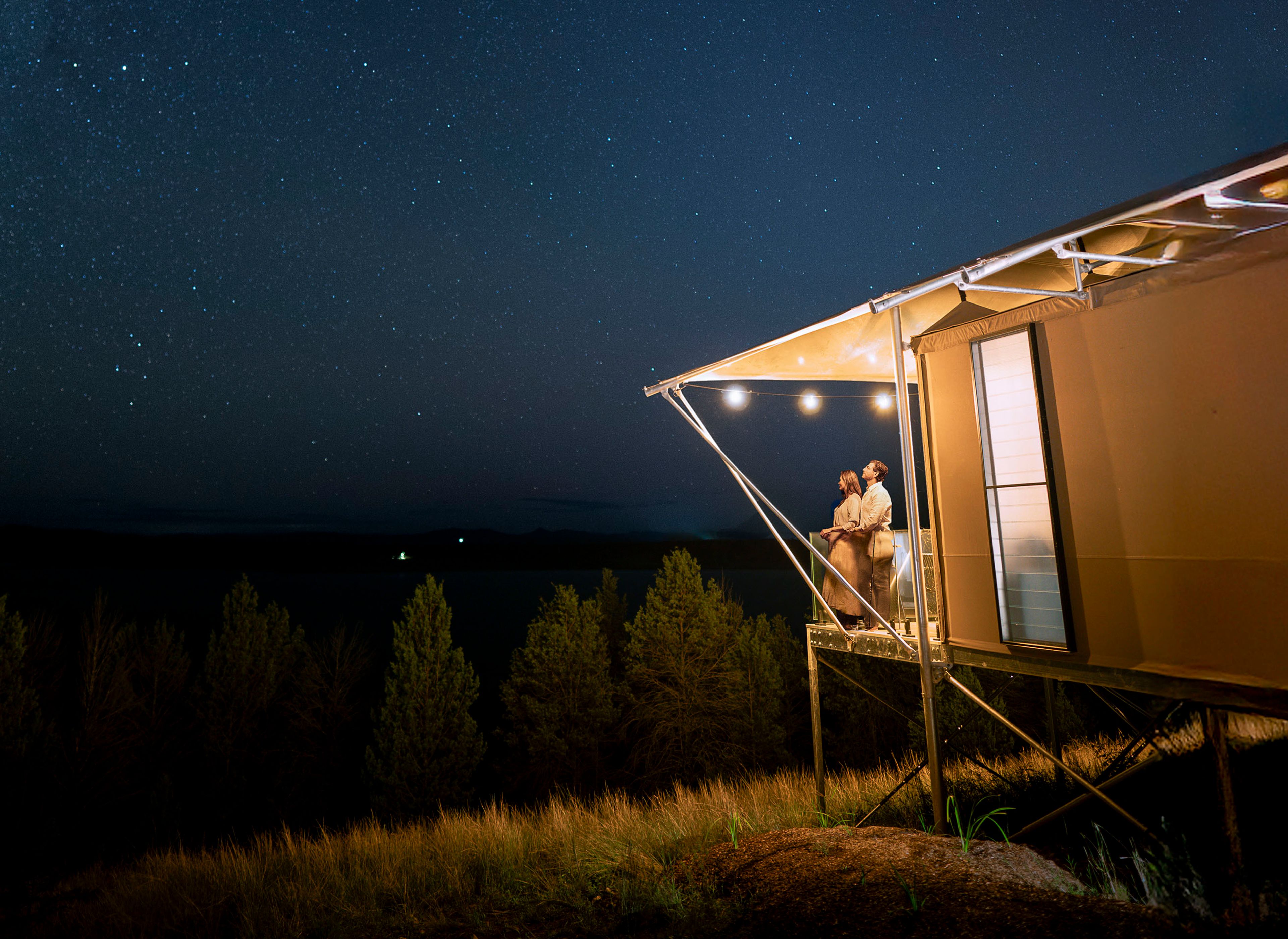
Out here in Big Sky Country, nightfall is a show all its own. With minimal light pollution and wide horizons, Wilderluxe Lake Keepit is perfectly placed for slow evenings beneath a sky filled with stars, planets and the occasional shooting star.
To help you plan the ultimate stargazing escape, we’ve mapped out the key celestial moments of 2026, from dramatic full moons to moonless nights perfect for spotting the Milky Way, plus a few meteor showers that may send streaks of light across the sky.
Full Moons seen from Lake Keepit
- Sunday 1 February
- Tuesday 3 March
- Thursday 2 April
- Friday 1 May
- Sunday 31 May
- Monday 29 June
- Wednesday 29 July
- Friday 28 August
- Saturday 26 September
- Monday 26 October
- Tuesday 24 November
- Thursday 24 December
Meteor showers visible from Lake Keepit
- 22-23 April - Lyrids
- 5-6 May - Eta Aquariids
- 13-14 December - Geminids
Full moon dates 2026
- 1 February
- 3 March
- 2 April
- 1 May
- 31 May
- 30 June
- 29 July
- 28 August
- 26 September
- 26 October
- 24 November
- 24 December
Supermoon dates for 2026
Equinoxes & Solstices
- 23 September - September equinox
- 22 December - December solstice
Your celestial dictionary:
- Supermoon: A full moon appearing larger and brighter when closest to Earth
- Eclipse: an astronomical event that occurs when one celestial body moves into the shadow of another, temporarily blocking its light
- Lunar eclipse: When Earth’s shadow falls on the Moon, darkening it
- Solar eclipse: Meteor shower: a celestial event where numerous meteors — caused by Earth passing through a comet’s trail of debris — streak across the night sky, appearing to radiate from a specific constellation.
- Planet at opposition: When a planet is directly opposite the Sun in the sky, brightest and easiest to see
- Equinox: When day and night are of equal length (March and September)
- Solstice: Marks the longest day (summer) or shortest day (winter) of the year
Tips for stargazing
For the best experience, bring along a blanket or reclining chair so you can comfortably lie back and take it all in. A red-light torch is ideal for moving around without disturbing your night vision, and stargazing apps can help you identify constellations and planets in real time. And if you’re lucky enough to visit during a meteor shower, give your eyes 20-30 minutes to adjust, and you’ll be amazed at how much more you can see.

Plan your stargazing escape
Whether you’re visiting for a new moon stargazing retreat or hoping to catch a meteor streak across the sky, Wilderluxe Lake Keepit offers a front-row seat to the cosmos.
Here, evenings are for slowing down, soaking in an outdoor bath, watching the Milky Way emerge above the lake and feeling wonderfully small beneath the vastness of Big Sky Country.
Because sometimes the best show on Earth is happening far above it.